
The origin of Luma
Luma started with a simple observation: a lot of young adults are not failing at life because they are lazy. They are overwhelmed because no one clearly teaches them how everyday life systems work together. Bills, appointments, subscriptions, routines, deadlines, and personal responsibilities all pile up fast. As a result, adulthood can feel confusing before it ever feels manageable. There is a need for a life clarity app for young adults, and I wanted to make it a reality based on my own needs and the needs I have learned from the people around me
That is where the idea for Luma came from. I wanted to create a life clarity app for young adults instead of just giving them another long to-do list. Luma is designed to be a life clarity app for young adults that brings the hidden systems of everyday life into one place. Instead of adding more noise, it creates structure. That idea became the foundation of the venture.
Young adults want more life clarity
As I started shaping Luma, I paid close attention to how other young adults talked about their daily stress. One of the biggest things I kept hearing was that people did not feel unmotivated. Instead, they felt scattered. For example, when I explained the concept to other students and young adults, one of the strongest responses was basically, “I do not need more pressure. I need one place that helps me understand everything I am trying to keep up with.” Even the American Psychological Association has come out with warnings about how young adults are "completely overwhelmed by stress" and are not handling stress the same way different generations are which is causing health issues in young adults.

That kind of feedback mattered because it confirmed that the problem was real. People were not asking for another productivity app that simply told them to do more. They wanted something that made life feel less chaotic. Because of that, I leaned harder into Luma’s message of clarity, support, and everyday structure.
The challenge of a life clarity app
One real challenge I faced was narrowing the idea. At first, Luma could have easily become too broad. I wanted it to help with everything, which made it harder to explain clearly. That was a problem because if people do not immediately understand your value, they are less likely to care.
So I adjusted my approach. Instead of trying to make Luma sound like it could do everything, I focused on one core promise: helping young adults organize the systems behind everyday life. That shift changed the venture for the better. It improved the branding, sharpened the website message, and made the products feel more connected. In other words, the pivot was not about changing the heart of the idea. It was about expressing it more clearly.
Values, vision, and impact
Luma is guided by a few core values: clarity, simplicity, support, and confidence. I want the brand to feel helpful, not judgmental. I also want it to feel realistic. Many people are trying to manage school, work, money, health, and personal responsibilities all at once. Therefore, Luma is meant to reduce overwhelm and make adulthood feel more approachable.
The long-term vision is to create a life clarity app for young adults that genuinely helps people feel more capable in everyday life. That impact could start small, with one student feeling less stressed about bills or deadlines. However, it could also grow into something bigger by giving young adults a better framework for navigating adulthood with more confidence and less confusion.
What comes next for Luma
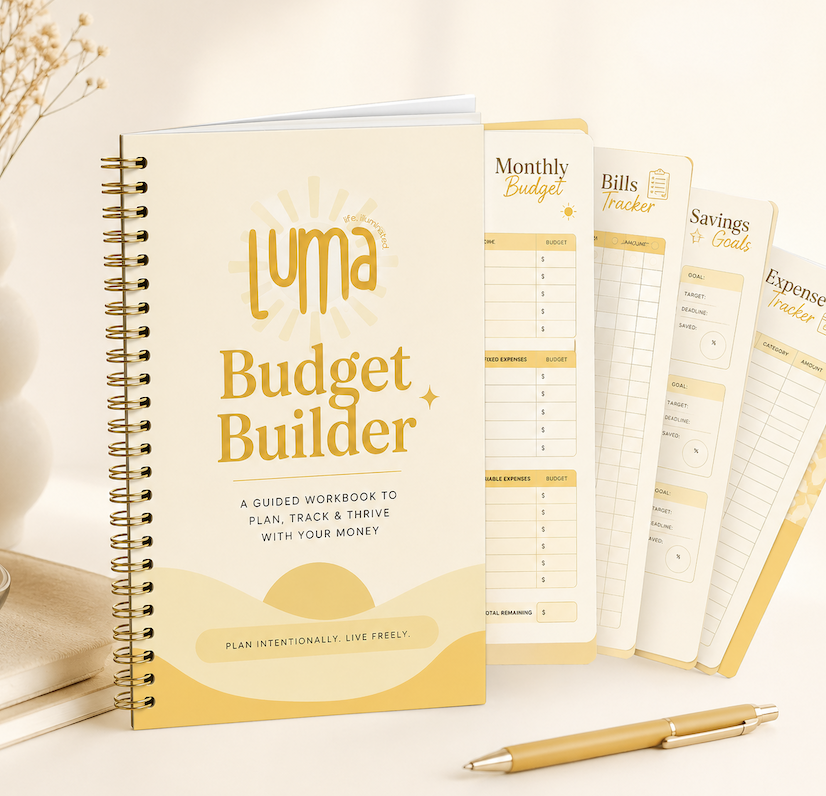
Over the next three to six months, my goal is to keep refining the Luma brand and testing how people respond to it. That includes improving the website, strengthening the app concept, and building out companion products like the Budget Builder and Daily Planner Notepad. I also want to keep gathering feedback so I can better understand what features and messages connect most with my audience.
So far, bringing Luma to life has taught me that a strong venture is not just about having an idea. It is about understanding a real problem, listening closely, and being willing to simplify your message until it truly connects. Luma began with the belief that life can feel clearer. Now I am learning how to turn that belief into something useful, practical, and real.